Currently accepting new patients (15 and up ) at our new location in Mission Valley, San Diego

EMDR Therapy in San Diego
EMDR therapy is an evidence-based approach designed to help the brain and nervous system process distressing experiences that may continue affecting emotional regulation, anxiety, trauma responses, self-perception, relationships, and daily functioning long after the original experience has passed.
EMDR therapy may help individuals struggling with trauma, PTSD, anxiety, chronic stress, emotional overwhelm, nervous system activation, and survival based patterns that no longer feel sustainable.
What Is EMDR Therapy?
EMDR therapy helps the brain reprocess distressing experiences in a way that reduces the emotional intensity and nervous system activation connected to those memories while supporting healthier emotional integration and regulation over time.
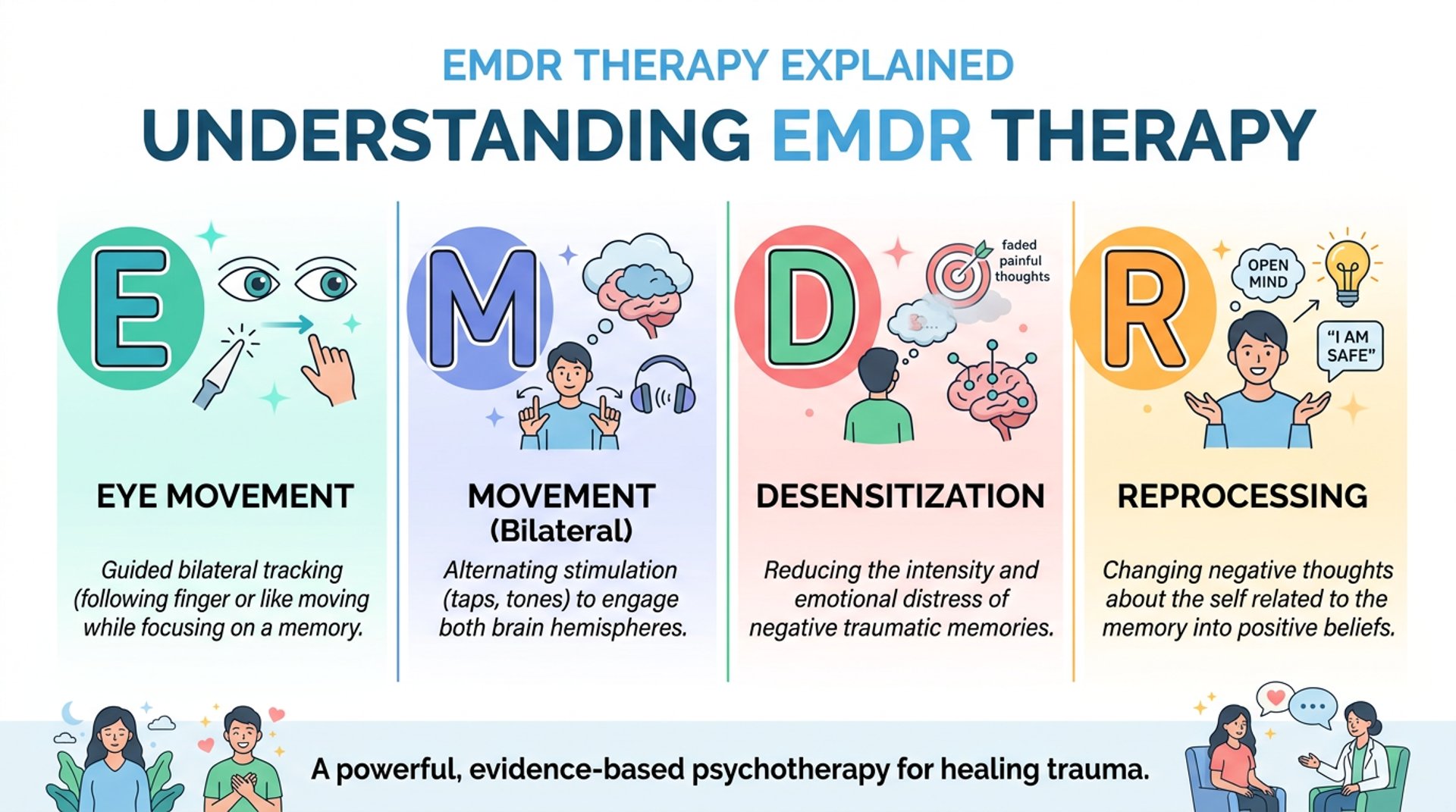
During EMDR therapy, clients remain awake, aware, and in control throughout the process. Treatment typically involves structured phases that help identify distressing experiences, emotional responses, beliefs, body sensations, and behavioral patterns connected to the issue being addressed. Bilateral stimulation techniques, including eye movements or other forms of rhythmic stimulation, are then used to support the brain’s natural processing abilities.
EMDR is widely recognized as an evidence-based treatment for trauma and PTSD, and may also be helpful for anxiety, chronic stress, panic responses, emotionally overwhelming experiences, and other stress-related patterns, depending on the individual and the clinical situations.
EMDR stands for Eye Movement Desensitization and Reprocessing. It is an evidence-based psychotherapy approach originally developed to help people process traumatic experiences and distressing memories that continue affecting emotional functioning, behavior, nervous system responses, beliefs, and daily life.
Traumatic or overwhelming experiences are not always processed fully at the time they occur. In some cases, the mind and nervous system continue to react as though the experience is still emotionally active, even years later. This can contribute to anxiety, hypervigilance, panic, emotional shutdown, intrusive thoughts, avoidance, chronic stress responses, negative self-beliefs, relationship difficulties, or feeling mentally and physically stuck in survival mode.
What EMDR Therapy May Help With
Trauma & PTSD
Distressing memories, trauma responses, hypervigilance, emotional overwhelm, avoidance, intrusive thoughts, survival mode patterns, and PTSD related symptoms.
Anxiety & Panic Responses
Chronic anxiety, panic reactions, nervous system activation, racing thoughts, emotional overwhelm, and difficulty feeling mentally or physically settled.
Chronic Stress & Burnout
Emotional exhaustion, chronic pressure, nervous system overload, emotional depletion, irritability, and the long-term effects of functioning under sustained stress.
Negative Self-Beliefs
Persistent feelings of shame, guilt, self-criticism, inadequacy, failure, emotional stuckness, or deeply rooted beliefs formed through painful or overwhelming experiences.
Emotional Shutdown & Avoidance
Emotional numbness, disconnection, suppression, avoidance patterns, withdrawal, or difficulty feeling emotionally present and connected.
High-Pressure & Trauma-Exposed Environments
Stress exposure related to first responder work, healthcare, military service, leadership roles, caregiving, or other emotionally and operationally demanding environments.

What EMDR Therapy Can Feel Like
Many people are interested in EMDR therapy but unsure what the experience is actually like. One of the most common misconceptions is that EMDR forces people to relive traumatic experiences intensely or lose control during the process. In reality, EMDR therapy is structured, collaborative, and designed to move at a pace that feels manageable and clinically appropriate for the individual.
Clients remain awake, aware, and fully in control throughout sessions. Therapy is not about pushing people into overwhelm. Preparation, emotional regulation, nervous system stabilization, and creating a stronger sense of internal safety are important parts of the process before deeper trauma work begins.
Some sessions may focus more on understanding patterns, developing coping skills, strengthening grounding strategies, or identifying emotional and nervous system responses connected to stress and trauma. Other sessions may involve processing distressing experiences, memories, emotional reactions, or negative beliefs that continue affecting present functioning.
EMDR therapy is highly individualized. The pace, structure, and focus of treatment are tailored to the person rather than forcing everyone through the same process in the same way. Many people notice that over time they begin feeling less emotionally reactive, less stuck in survival responses, more grounded, and better able to respond to stress, memories, and emotional triggers with greater flexibility and regulation.

My Approach to EMDR Therapy
My approach to EMDR therapy is grounded, structured, trauma-informed, and tailored to the individual rather than forcing people through a rigid process. I view EMDR as part of a broader therapeutic approach focused on understanding how trauma, chronic stress, emotional experiences, and survival-based patterns continue affecting emotional regulation, nervous system functioning, relationships, and daily life.
Treatment is approached collaboratively and at a pace that feels clinically appropriate and manageable for the individual. Depending on the person and the clinical need, EMDR therapy may be integrated with Cognitive Processing Therapy, Neuropsychotherapy, nervous system-informed interventions, emotional processing work, and trauma-informed relational approaches.
EMDR therapy can help reduce the emotional intensity connected to distressing experiences while supporting healthier emotional processing, regulation, and long-term functioning over time.
EMDR Therapy & Trauma Recovery
EMDR therapy is not about erasing memories or pretending difficult experiences never happened. The goal is to help distressing experiences feel less emotionally overwhelming, less activating to the nervous system, and less controlling in the present.
As trauma and stress-related experiences become more fully processed, many people notice improvements in emotional regulation, anxiety, panic responses, sleep, emotional presence, relationships, nervous system reactivity, and their overall ability to move through life without feeling constantly pulled back into survival-based patterns.
Trauma recovery often involves more than reducing symptoms alone. It may also include rebuilding a stronger sense of emotional safety, trust, connection, flexibility, self-understanding, and the ability to respond to stress without remaining stuck in chronic activation, shutdown, or avoidance.
EMDR therapy can become part of helping people move from surviving experiences toward processing and integrating them in a healthier and more sustainable way over time.
Terms and Conditions

Flexible Therapy Options
EMDR sessions are available in person in Mission Valley, San Diego, and through secure telehealth appointments throughout California.
I offer a free consultation to discuss what is bringing you in, answer questions about the therapy process, and determine whether EMDR therapy or another treatment approach may be appropriate for your needs and goals. The consultation is designed to provide clarity, direction, and a better understanding of what support may look like moving forward.
My Office
4025 Camino Del Rio South, Ste 300,
San Diego, CA 92108
Carl H Gregory, LMFT
© Copyright 2026 Carl H Gregory Therapy